
When Machines Decide Who Lives and Who Dies – AI: The Most Powerful Tool Humanity Ever Built, and Its Hidden Threats
By Hikmat Turabi
Artificial Intelligence is no longer a topic for the future. It is here, in our phones, in our businesses, and in our daily decisions. We use it to write emails, to create logos, to analyze sales. But as we celebrate its speed, a serious conversation is happening in every capital of the world. How do we control a technology that is becoming more intelligent than us?
The threat of AI is not like a science fiction movie where robots attack us. The real threat is more silent, more structural, and more human.
The first wave of danger is already visible. We call it the collapse of truth. Today, anyone with a laptop can create a perfect video of a prime minister, a CEO, or a father asking for money. Voice cloning, face cloning, and fake documents have made it almost impossible to trust what we see online. During recent elections in different countries, millions of voters were targeted with AI-generated fake news in their own language. For societies like South Asia, where WhatsApp is the main source of news, this is a direct threat to social stability and trust.
Along with this comes a new form of crime. Cyber criminals no longer need to be hackers. They just need to copy your voice or your writing style. We are seeing cases where a finance manager receives a voice note from his boss and transfers millions. The bank calls, the email, the profile, all look real. This will increase in the coming years, and our institutions, from banks to government databases to small businesses, will have to invest heavily in verification.
The second layer of threat is more dangerous, and the United Nations has already warned the world about it. It is the rise of autonomous weapons and AI-driven warfare.
In the past, wars required large armies and huge costs. AI is changing that. Today, we have drones and weapon systems that can identify, track, and kill a target without a human giving the final order. Over 30 countries are actively developing these systems. This makes war cheaper, faster, and easier to start. A small conflict can escalate into a major one because machines do not feel fear, hesitation, or mercy. The UN Secretary-General has called autonomous weapons that take life-and-death decisions without human control morally unacceptable and has called for a global treaty to ban them. If this is not regulated, we risk entering an era where algorithms, not generals, decide the fate of borders and lives.
The third layer is economic and political. In the next five years, AI will not take all jobs, but it will definitely change the nature of entry-level jobs. Customer care, basic graphic designing, data entry, and translation are already being automated. The real risk for our youth is not unemployment, but a gap between what they learned in university and what the market needs.
More importantly, there is the risk of extreme power concentration. At this moment, only three or four companies in the world have the computing power and data to build frontier AI models. If we are not careful, the entire world will depend on them for knowledge, for business intelligence, and for decision-making. This is a new form of digital colonization. Countries that do not build their own local and ethical AI models will be left behind, not just technologically, but culturally as well. They will lose control over their own data and their own narrative.
Then there is the most serious long-term threat, which scientists like Geoffrey Hinton, the Nobel laureate and godfather of AI, have been warning about. It is called the alignment problem. We are teaching machines to be highly intelligent, but we have not yet taught them to be human in values. A superintelligent system given a simple goal might achieve it in a way that harms humans, because it does not understand human context, mercy, or ethics.
So, what is the solution? Banning AI is not the answer. The answer is not less AI, but more human intelligence.
The first solution is global regulation. Just like we have treaties for nuclear weapons and chemical weapons, we need treaties for autonomous weapons and for powerful AI models. All AI-generated content must be clearly watermarked and labeled. The European Union has already passed its AI Act as a first step.
The second, and more important solution, is Emotional Intelligence. This is where we often miss the point. We are focused on making machines more intelligent, but we need to make humans more emotionally intelligent.
Emotional Intelligence is the ability to understand our own emotions, to have empathy for others, to question, to pause, and to think critically. AI can write a perfect sentence, but it cannot feel guilt, love, or responsibility. It cannot understand the pain of a farmer or the trust of a mother buying food for her child. A machine can be programmed to hit a target, but it can never understand the value of peace.
In the coming years, the most valuable skills will not be coding or data analysis, because AI will do that. The most valuable skills will be purely human. Skills like trust-building, ethical judgment, leadership, storytelling, and compassion.
AI is a tool. Like fire or electricity, it can cook our food or burn our house. The choice is not in the tool, it is in the hands that hold it. If we combine Artificial Intelligence with Emotional Intelligence and strong ethics, this technology can become the biggest opportunity in our history, not the biggest threat.
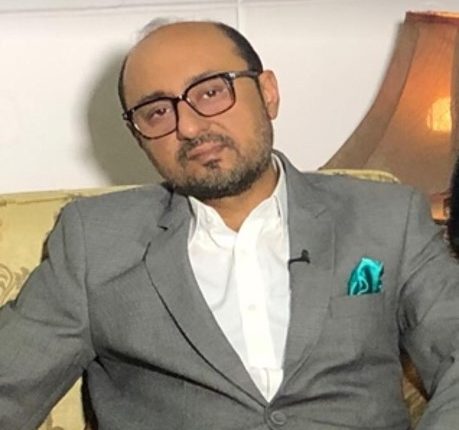
Hikmat Turabi is Founder & CEO of Data Ethics Private Limited and Founder of the Institute of Data Intelligence (IDI), Pakistan. As a prominent subject matter expert, trainer, speaker, he writes on data governance, privacy, AI governance and digital policy.